
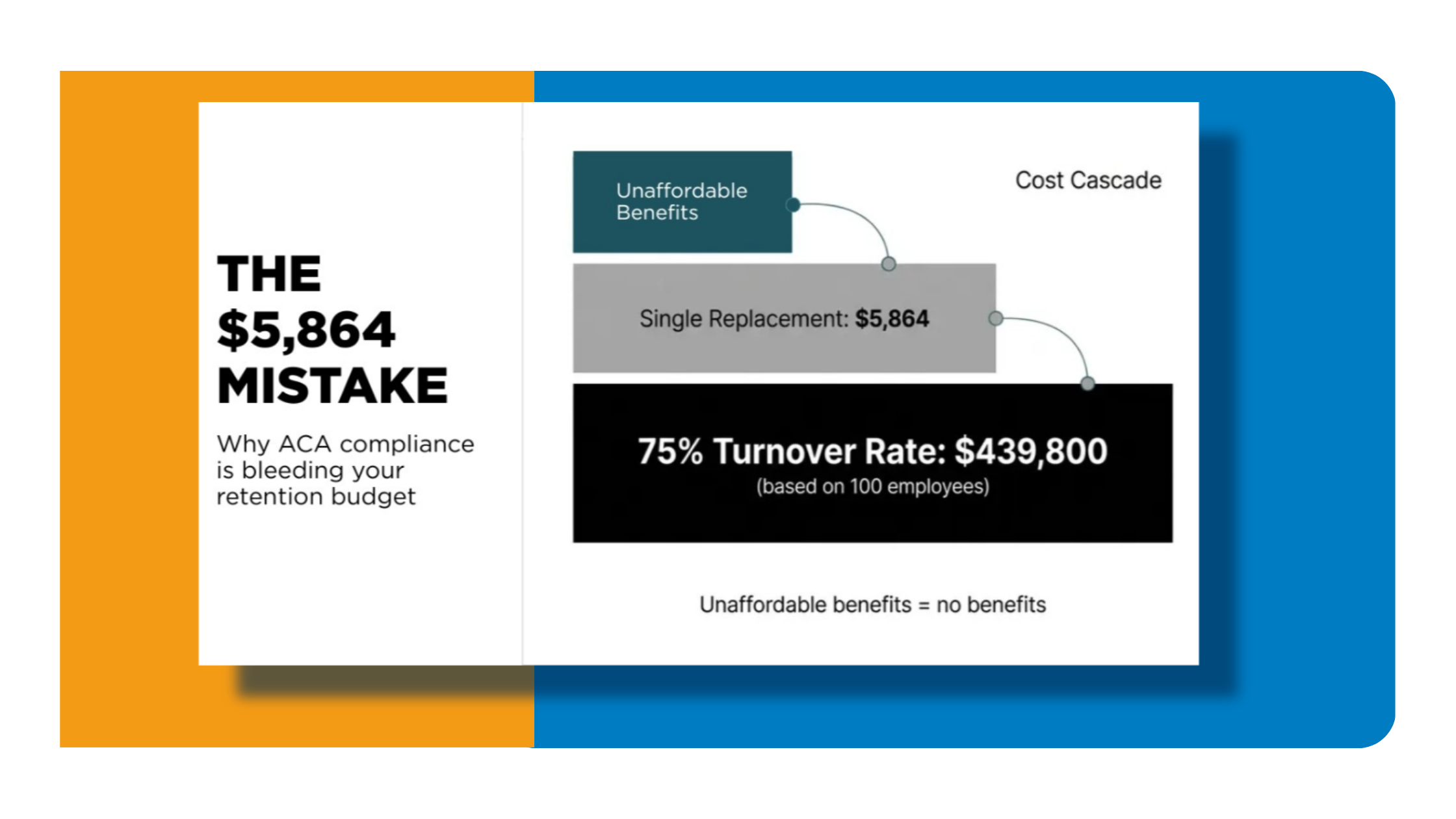
Most companies treat ACA compliance as a regulatory requirement: something to manage, minimize, and move past. But for employers with high-turnover, hourly-wage workforces, ACA strategy can directly affect whether employees stay or leave.
When coverage is too expensive, confusing, or difficult to administer, it may technically meet compliance requirements while still failing the workforce. That creates hidden costs through turnover, administrative strain, cash flow issues, and potential penalties.
- Compliance alone does not guarantee a strong benefits strategy. An ACA-compliant plan that hourly workers cannot afford or understand may do little to support recruiting, retention, or employee trust.
- High-turnover workforces create unique administrative challenges. Variable hours, frequent schedule changes, onboarding, terminations, eligibility tracking, offer documentation, and reporting requirements can quickly overwhelm traditional benefits models.
- Benefits should be treated as a competitive advantage. Employers who design affordable, usable, and properly administered benefits programs are better positioned to retain employees and reduce the hidden costs of constant turnover.
For staffing firms, security companies, restaurants, hospitality employers, and other hourly workforce industries, ACA compliance should not be viewed as a checkbox. The right strategy can help control risk, reduce administrative burden, support employees, and turn benefits into a meaningful retention tool.
RightPath has decades of experience advising employers with high-turnover, hourly-wage workforces. We know the challenges you face, and more importantly, we know how to solve them.
